
Excess carbon dioxide is an important issue
Excess carbon dioxide is a problem for the planet. Technologies are rapidly needed to remove atmospheric carbon dioxide.
Large scale cultivation of microalgae can capture carbon dioxide in the air and slow global warming.
Large scale cultivation of microalgae can capture carbon dioxide in the air and slow global warming.
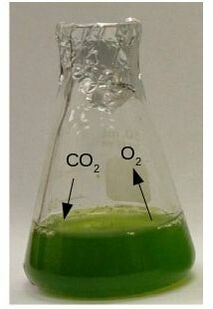
Microalgae in space
One issue with long-term space travel is creating enough oxygen for astronauts to breathe. Astronauts typically rely on machinery (requiring parts and maintenance) for this purpose. Microalgae can 1) convert carbon dioxide to oxygen, 2) be easily transported with astronauts, 3) use the natural "fertilizer" found in astronaut waste, 4) manufacture biofuel in space, and 5) produce food in space.
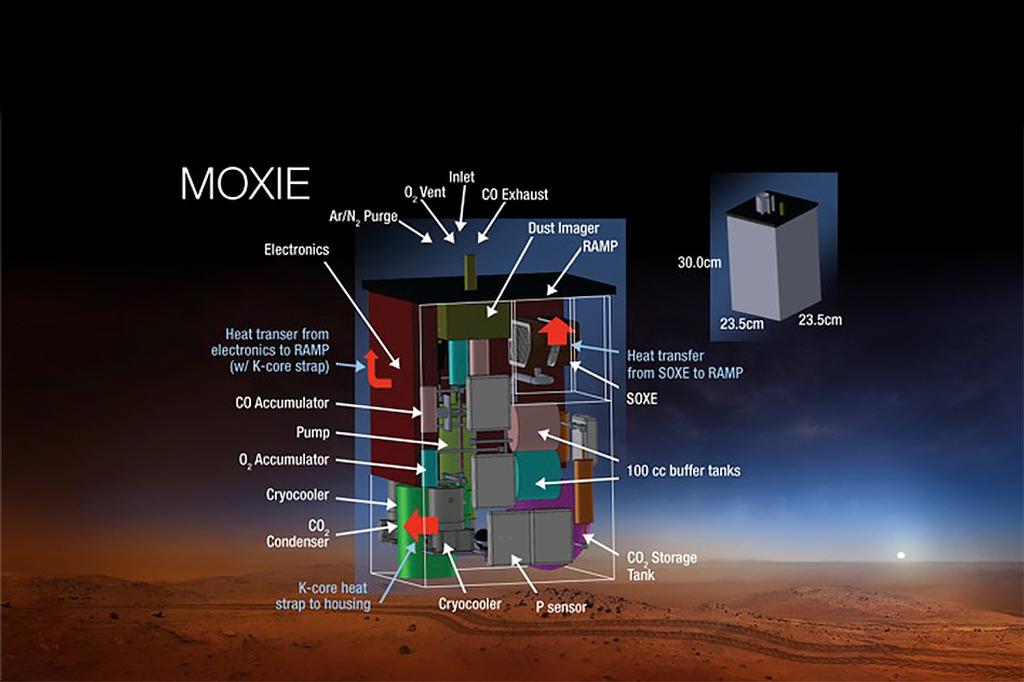
The MOXIE unit will be tested in 2020 on a Mars rover and is intended for use in a space station on Mars. This unit will convert carbon dioxide in Mars' atmosphere to oxygen.
|
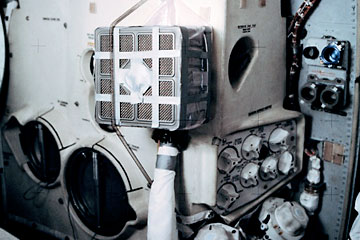
An old lithium hydroxide module that converted carbon dioxide to oxygen for astronauts.
|
Microalgae on submarines
A similar set of issues encountered by astronauts are encountered by submariners on long missions. Submarines have two separate processes to 1) scrub the carbon dioxide from the air and 2) create breathable oxygen from water. Microalgae can decrease reliance on these systems while using human waste onboard submarines.
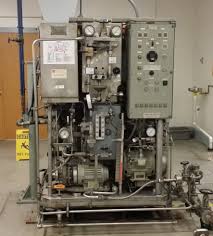
Carbon dioxide scrubber for submarine.
|
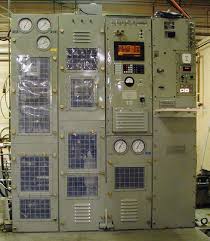
Oxygen is generated by electrolysis of water in this electrolytic oxygen generator.
|